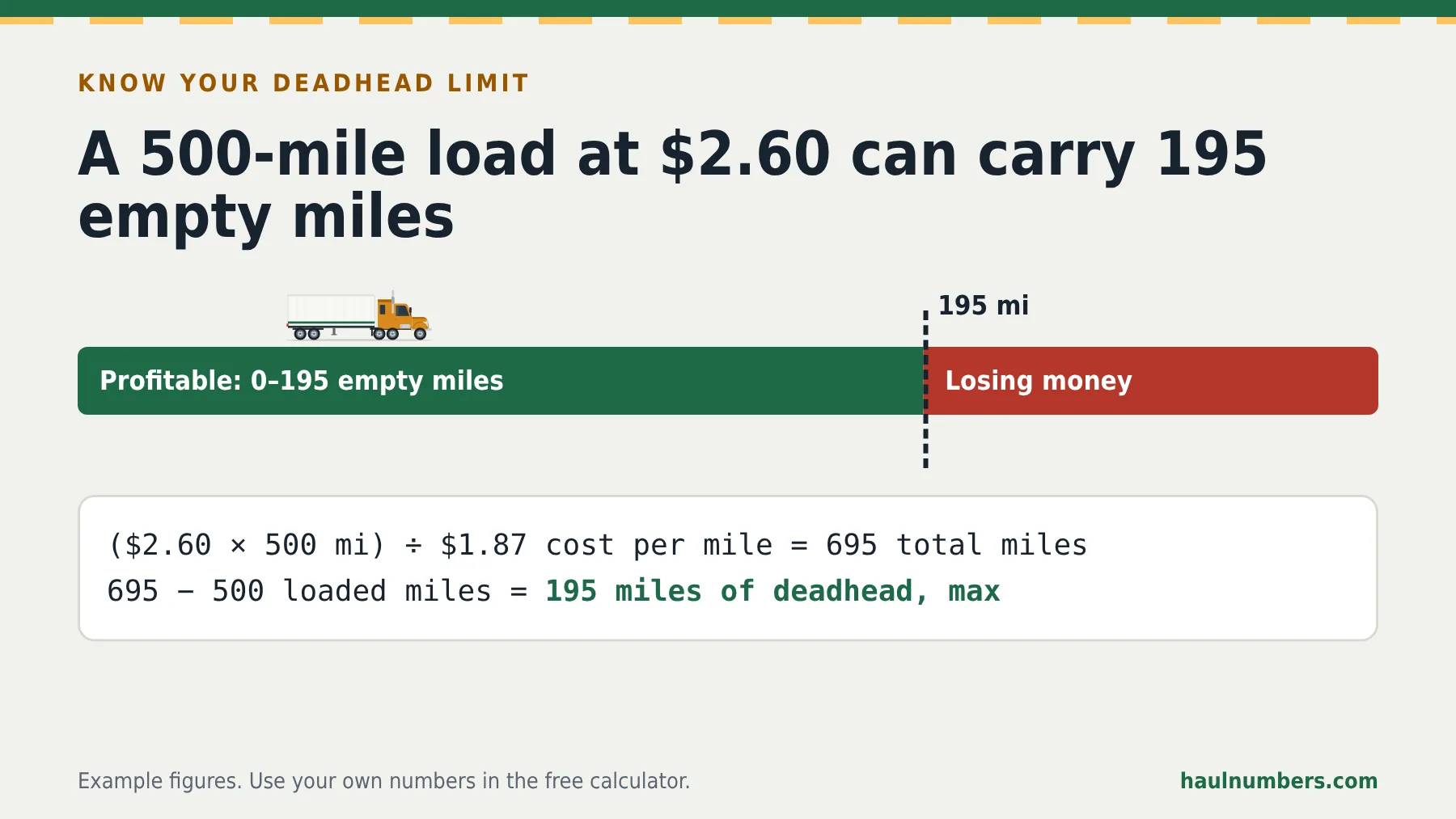
Know your deadhead limit
For any load there's a point where the empty miles wipe out the profit. The deadhead calculator shows that limit and your real rate per mile driven.
Max deadhead = (rate × loaded miles ÷ cost per mile) − loaded miles
8 ways to cut empty miles
- Look for the reload before you book. Check outbound freight from the delivery city first.
- Learn your lanes. Run regular lanes with steady freight both ways.
- Build backhaul relationships. Shippers and brokers in your delivery areas can give you return loads.
- Take partial or LTL loads to cover the trip home.
- Plan home time around freight. Pick home-time windows when your area has outbound loads.
- Use load board filters for pickups within a set radius of your delivery.
- Price deadhead in. Use it to negotiate a higher rate with the load profit calculator.
- Track it monthly. Watch your deadhead percentage in the cost per mile calculator.
When deadhead is worth it
Driving empty to a strong market can be smarter than taking a cheap load into a weak one. Compare whole round trips, not single loads. See how to tell if a load rate is good.
Common questions
What is a good deadhead percentage?
Many carriers aim for under 10–15% of total miles.
Do brokers pay for deadhead?
Rarely. Build it into your rate instead.