Start with your break-even
A rate is only good or bad compared with what it costs you to run. Work out your break-even rate per loaded mile with the cost per mile calculator, then use it as a hard floor. Below that number, every mile loses money.
Use rate per total mile, not rate per loaded mile
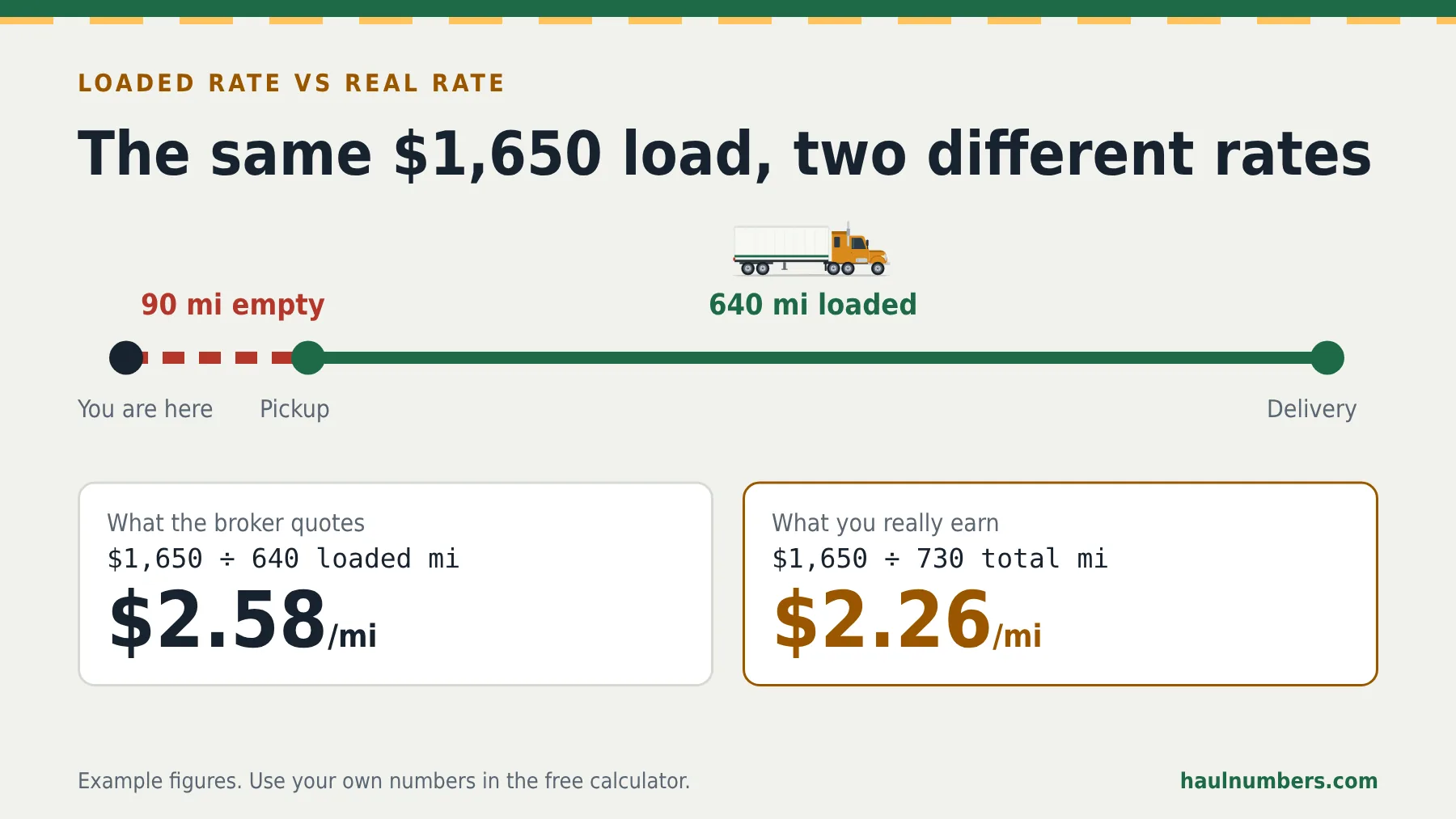
Brokers quote the loaded rate. But you also drive to the pickup. A $1,650 load over 640 miles looks like $2.58 a mile. Add 90 deadhead miles and it really pays $2.26 for every mile you drive.
Rate per total mile = load pay ÷ (loaded miles + deadhead miles)
The load profit calculator shows both numbers, your profit after fees, and a counter-offer that hits your minimum.
Five questions to ask before you book
- Does it clear my break-even by my minimum? Set a profit floor, for example $0.30 per total mile above all costs.
- How much deadhead? Check the deadhead calculator for the most empty miles the load can carry.
- How long will it take? A short load with a long wait at the shipper can pay less per day than a longer, cheaper run. Ask about detention pay.
- Where does it leave me? A great rate into a market with little outbound freight can mean a cheap reload or a long deadhead out.
- Who is paying, and when? Check the broker's credit and days-to-pay. Slow payment costs you money if you factor.
Think in round trips
Judge the head-haul and back-haul together. A modest outbound rate into a strong reload market can beat a high rate that strands you. Add up both legs, divide by all miles, and compare the result with your break-even.
Negotiating
- Know your counter-offer before you call, and open a little above it.
- Mention deadhead, tight appointment times or extra stops as reasons for a higher rate.
- Be ready to walk away. Saying no to losing loads is how profits grow.
Common questions
What is a good rate per mile for an owner-operator?
One that covers your own break-even plus your profit minimum. Find yours with the cost per mile calculator, because averages hide big differences between trucks.
Should I take a cheap load to get out of a bad area?
Sometimes. Compare the round trip, including the next load, with sitting or deadheading out.